Homeowner’s Primer: Do you know the basics?

New homeowners often find there’s more to keeping up a house than cutting the grass and clearing snow from the driveway.

Tools
To start with, a new homeowner needs to have on hand a ‘basic tool kit’. A number of basic tools are a must C a metal hammer, screwdrivers with a variety of heads, a small saw, electric drill, adjustable wrench, pliers and measuring stick. Sandpaper and an assortment of screws and nails are also very handy. These tools will help with simple repairs such as securing loose tiles, adjusting a door, installing a lock, etc.

Meters
Once you’re equipped to perform the most basic repairs, take a look around. Do you know where your gas/electricity and water meter are located? Usually these are found outside the home by a side or back wall. This makes it easy for the meter reader who can take the readings without bothering you. Sometimes these meters, especially the water meters in older homes, are located indoors — usually in the basement.

As new homeowners, it’s a good idea to check your meters on a weekly or monthly basis. This will help you gain an understanding of seasonal increases and decreases in consumption and enable you to take measures to become more energy/water efficient.

Plumbing
Another area where a little knowledge can go a long way is in the plumbing system. House plumbing is divided into two separate parts. One is the fresh-water system that provides cold and hot water from the various fixtures throughout the house; the other is the drainage system that carries waste out of the house.

The fresh-water system can be completely shut down by closing the main valve, which is usually located in the basement near where the underground water line enters the house. Most lines that branch out from the main line also have individual shut-off valves so water can be turned off to one area without disturbing the flow in another. Most plumbing jobs require at least the partial shut-off of your home’s water supply.

Meanwhile, the drainage system connects all the plumbing fixtures to a main sewer line that carries waste out of the house to a sewer or septic tank. The main sewer line extends above the roof of the house to allow gases to escape. The opening of this pipe, above the roof, is called a vent and must never be covered or allowed to become clogged with debris.

Electrical
Knowledge of your home’s electrical system is also valuable in case you have to turn off all power in case of an emergency, such as a fire. You should know the location of the main electric switch in the house and how to use it. You should also know the location of the fuse box or circuit breaker and how to reset a breaker or replace a fuse in case one blows.

The main switch, along with the circuit breaker panel or fuse box, are located near the electric meter at a point close to where the power lines come into the house. They may be in the basement, utility room, or even the kitchen. The older the home, the more likely it will have a fuse box instead of a circuit breaker panel. Always replace fuses with ones of the same capacity.

Heating
Another important aspect of your new home is its heating system. The more familiar you are with it, the less likely you might find yourself cold on a winter’s day. Heating systems are usually fueled by oil, gas, electricity or wood.

Gas-fired and oil-fired heating systems have burners and should be inspected regularly, usually once a year before the start of the heating season. Gas burners have pilot lights. You should learn to re-light the pilot light on your gas burner in case it ever goes out. You should also know the location of the gas shut-off valve so you can turn off the gas in case the burner doesn’t light or you smell gas escaping.

Heating systems operate in a variety of ways. The better you understand your system, the safer and more efficient you can make it.

Hazards
Fire in a home is a major hazard that all new homeowners should be aware of. Early detection is the key to protecting your family and keeping damage to a minimum. Ensure your home has smoke detectors installed in hallways and bedroom areas. Smoke detectors sound an alarm when smoke is in nearby air, even if there is no intense heat. Ideally, you should have a smoke alarm in each bedroom.

If you have a gas-fired heating system or a fireplace in your home, it’s also a good idea to install carbon monoxide detectors in the bedroom areas. Carbon monoxide is a colorless, odorless, tasteless toxic gas that, at high levels, can cause flu-like symptoms and even death.

While carbon monoxide detectors are not a substitute for proper care and maintenance of your home, they provide a good second line of defense by sounding an alarm when carbon monoxide reaches an unsafe level.

When we purchase a home, most of us want to turn it into a safe and secure haven for our families. The more we know about the home we have purchased, the more efficient and effective we can be.  

Spring has Sprung! by John Walsh.

 
At least as far as rates are concerned. The spring thaw has begun!
This week has seen a flurry of activity from various lenders, primarily in the mid to long term rates 5, 7 & 10 years.

Checking the rate board today shows *ALL* short term rates below 4%
Last week, the 10 year was down a full percentage point to 5.25%.

These are historic times. If you can, take advantage of the low rates. Buy into a real estate investment that will now easily return a better ROI than the rate at which you are borrowing funds. There’s several out there, not the least of which is Keith’s condo-hotel project in St. Sauveur.

I think the Bank of Canada’s chairman is finally getting his wish, even before they announce their policy on buying up long term bonds. I think hinting at doing this at the last session was enough for the markets to react.

I think the spring market is going to be as busy as the record breaking spring market in 2007. Are you ready?

Have a great week everyone!


Warmest regards

John R. Walsh, B.Eng
Mortgage Agent with Mortgage Alliance
Licence Number: M08000603
Founder of O.R.E.I.O.

613-237-7044 x148
888-474-0137 (toll free fax)

jwalsh@mortgagealliance.com
jr2walsh@gmail.com
http://ForAllYourMortgageNeeds.com

A REALTOR Knocked on my Door….

Its 9:30am on a Tuesday morning, and Im on my phone when I hear the door knock. I go downstairs, push the cat away from the door, and open it up.

“Hi! My name is Janice (not her real name), and Im a REALTOR – So when are YOU moving?”

I stood there for a second – looking at her. Wondering if I knew her from somewhere. She was in her 50’s, seemed like a nice lady. She had an assistant behind her who was about my age – seemed like a nice guy too.

“Well” I said, “I just moved here so I don’t think it will be soon”.

After a few lines back and forth, she asks me, ” Would you ever consider using a REALTOR?”

I smirked, “Actually, Im a REALTOR”

Her face dropped.

“Oh…well who do you work for?” Her tone immediately changed – like she was standing face to face with her nemesis, and was disgusted by my very appearance. It was begining to get really uncomfortable.

Then.. no sooner than I had finished my sentence, ” Partners Advantage GMAC” – she looked at me with no expression, and moved her hand in an arc – to say goodbye. She turned around. She walked away.

After I closed the door – I didnt feel right.  Why was I feeling like I just got in a confrontation – like I shouldnt be here and I was unwelcome? Why had Janice’s face turn cold and this completely different demeanor come out once she realized I was a fellow REALTOR? Is this how she really is? Was she just pretending to be a nice lady?

Then I started to think – is she going around MY NEIGHBORHOOD with that fake smile, trying to pull a blanket over my neighbors eyes? My neighbors are really nice people – and hard working ones. She better not be preying upon these people.

But you know what? Of course she is. Thats what a lot of REALTORS do. Its unfortunate, but its true. They PREY – to make a buck.

wolfinsheepsclothes

I am intending on farming my own neighborhood as soon as I unpack (maybe thats too late!), but I would never go around and try to hussle information out of someone – all the while putting on a fake smile to try and not appear as my true self!

I really feel like I need to defend my neighborhood against these kinds of people. And im not talking about REALTORS – I was dealing with another REALTOR from another firm just yesterday – and he’s a great guy, always liked him. But I need to defend against the BAD REALTORS – the ones who take advantage of others and are merely putting on a show so they can get in YOUR wallet.

I quit my stable and well paying government job to get into Real Estate because I am territorial, and I have always believed in a person’s right to live on and prosper from their own land, and to be safe in doing so. Growing up, I always respected the owners of the house, and believed that as long as you are under your own roof, you are the king/queen.  People like this REALTOR that came around seem like the two faced caniving backstabber you see in the movies that win the king over, only to help them become overthrown. Thats not right.

I have pulled out my condominium corporation’s legal documents, and I am finding and locating my Board of Directors, and I am getting involved. I am going to join this Board and protect my people.

lion-and-the-lamb

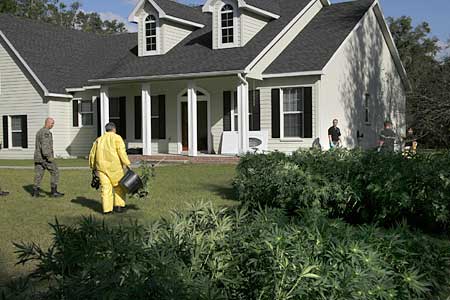
15 Sings of a GROW HOUSE

tb_growhouses_450x300

• The house does not appear ‘lived in’. Someone occasionally enters the residence and only stays for short period of time

 • The exterior appearance of the property is not cared for on a regular basis (i.e. snow removal, grass cutting).

 Persons often back into the garage and enter the house this way.


• Garbage is minimal and may contain used soil and plant material.


Windows are covered.

Bright light can be seen escaping from windows. • Windows are often covered with condensation.

• Sounds of interior construction may be heard.

• Timers may be set inside the residence.


• Marijuana houses can produce a strong skunk-like odor.


• Items being brought into the house include soil, planters, fans and large lights.


• Garbage bags are being taken out of the house and transported away.


• A grow house may not have snow on the roof when the other houses in the area will.

• Unusual amounts of steam from vents.


• Activity inside the house seems to take place at odd hours. Items are moved in and out of the residence at odd times.

How to Save for a Downpayment

Owning your own home has a lot of payoffs, especially these days when mortgage rates are still among the lowest in 30 years. There are also many housing options available in a wide range of prices.

Simply put, you can carry a home of your own for no more than what you would pay in rent. And, unlike renting, your payments go toward increasing the equity in your home.

So, what’s stopping you? For most people who have never owned a home before, it’s the initial down payment and the ability to keep up with the monthly financial obligations (mortgage payment, insurance, utilities, maintenance).

The effort to save for and buy a home may require you to make significant changes in your way of life. For most people, it means changing their spending and lifestyle habits to support the additional costs of saving for, paying for, and maintaining a home.

One of the best ways of saving for a down payment is to take advantage of government programs available to first-time home buyers. A real estate professional can help you understand how these programs work and ensure that you get the maximum benefit possible.

RRSP Home Buyers’ Plan
Contribute to a Registered Retirement Savings Plan (RRSP) regularly and to the maximum allowed. The federal government’s RRSP Home Buyers’ Plan enables eligible taxpayers to withdraw up to $20,000 tax free from their plan to buy or build a qualifying home. The amount of money withdrawn must be repaid within 15 years.

If you buy the qualifying home together with your spouse or other individuals, each person can withdraw up to $20,000 tax free. A government form must be completed for each withdrawal.

Generally, an RRSP holder can participate in the Home Buyers’ Plan only once in a lifetime. The pamphlet, Home Buyers’ Plan (HBP) – For 1998 Participants, is available from Revenue Canada and will help you determine if you are considered a first-time home buyer.

A qualifying home is a housing unit located in Canada. Those participating in 1998 have to buy or build a home before Oct. 1, 1999. You must also agree to occupy the home as your principle residence no later than one year after buying or building it. Once you occupy the home, there is no minimum period of time that you have to live there.

Ontario Home Ownership Savings Plan
(OHOSP) OHOSP is a provincial program where participants receive interest on the money they deposit and may receive a tax credit. If you earn less than $40,000 a year, or if you and your spouse have a combined income of less than $80,000, you can benefit from the program. To be eligible, you must be an Ontario resident over 18 years of age with a social insurance number and have never owned a home.

While there is no limit to the amount of money you may deposit in your OHOSP, you can only receive OHOSP tax credits on annual contributions of $2,000 ($4,000 per couple) or less. Depending on your annual income and the amount of money you invest, you can earn up to $500 individually or $1,000 a couple in OHOSP tax credits. Participants are eligible for tax credits for five consecutive years and must close the plan and use the funds to purchase a home by the end of the seventh year. Otherwise, OHOSP tax credits must be repaid with interest.

An OHOSP plan, with interest earned at competitive rates, may be opened at any participating financial institution. To qualify, a home must be located in Ontario and be suitable for year-round residential occupancy. In addition, you must live in the home for at least 30 consecutive days within two years of the date of purchase.

CMHC five per cent down
While Canada Mortgage and Housing Corporation’s (CMHC) five per cent down option program doesn’t help you save for the down payment, it sure eases the way to home ownership.

With as little as five per cent down, all home owners now have access to CMHC mortgage insurance. This means CMHC may insure the mortgage on your home (against default in payments) for up to 95 per cent of the lending value of the home. This helps make home ownership a reality for many Canadians who can afford monthly mortgage payments but would have trouble saving for a larger down payment.

Previously available only to first-time home buyers, the program was expanded earlier this year to include all home buyers. Eligible borrowers include anyone who buys a home in Canada and occupies it as a principle residence. The mortgage insurance premium in 1998 is about 3.75 per cent of the mortgage loan and can be added to the mortgage or paid on a monthly basis.

How to Match the Home you buy to your Pocketbook

So, you’ve decided to take the big leap and purchase your first home. Most of us have a “dream home” tucked away at the back of our minds — complete with six bedrooms, two fireplaces and a panoramic view. Before setting off to view properties you likely can’t

Your “dream home” can easily become a nightmare when most of your money goes to pay the mortgage and there’s little left over for anything else. Overextending yourself financially is the quickest way to destroy the excitement of home ownership and add stress to your life.

Smart home-buying means knowing what you can afford and being practical about it. Most first-time buyers, in particular, lack the funds needed to buy a home without assistance from a bank or financial institution. Buying a home means combining savings with money borrowed through a special arrangement called a mortgage.

To keep mortgage payments within their means, most first-time buyers purchase what is commonly known as a “starter home.” A starter home is just that — a way of getting started in long-term real estate investment.

To match the home you buy to your pocketbook you have to realistically assess your needs, determine what you can afford and, usually, lower your expectations. Begin by enlisting the services of a real estate representative. This individual will help you target your home ownership dreams and provide valuable information on mortgage options, interest rates and incentives, such as government programs, for first-time buyers.

In the meantime, here are some ways to determine how much you can afford.

Set a maximum price range
To determine your “affordability” price range, you must calculate two amounts: the amount of cash you can afford to put towards the purchase (down payment) and the maximum amount of loan (mortgage) you can comfortably carry. Typically, household expenses should not exceed 35 per cent of your gross income.

Put down as much as you can
The key to getting started for most first-time buyers is the initial down payment. This is the part of the purchase price you have to put down as cash. You may be able to buy a home for as little as five per cent down. But remember that the larger the down payment, the easier it will be to manage the other expenses (mortgage, utilities and property taxes).

An ideal down payment is 25 per cent of the purchase price. Keep some cash in reserve though for unexpected expenses related to a home purchase and typical expenses such as land transfer tax, legal fees and moving expenses.

Know how much to borrow
To establish your maximum mortgage limit, a financial institution will determine the monthly payment you can afford by calculating your debt-service ratio. List all your loans (car, personal loans, monthly credit card balances). The sum of these and your mortgage payment, including principal, interest and taxes, should not exceed about 40 per cent of your gross income. The mortgage payment and taxes should not exceed about 30 per cent of your gross income.

Understand interest rates
The size of the mortgage you can arrange, based on payments you can afford, depends on interest rates. The lower the rates, the larger the possible mortgage and the more affordable home-buying will be. 

However, there are other variables to consider: How open is the mortgage? Is it portable? Would prepayment be allowed? Discuss your mortgage options with your REALTOR®, banker or financial advisor. Decide what’s best for you, establish a limit and stick to it.

Look at other sources of funds
If you have been contributing regularly to a Registered Retirement Savings Plan (RRSP), you may have to look no further for your down payment. The federal government’s RRSP Home Buyers’ Plan allows eligible taxpayers to withdraw up to $20,000 per person ($40,000 per couple) tax free from their plan to buy a qualifying home. However, you have to pay back every year at least 1/15th of the amount taken out until it is all paid back, or there will be a tax penalty.

The Ontario Home Ownership Savings Plan (OHOSP) is a provincial program which provides tax credits on annual contributions to an Ontario resident earning less than $40,000 a year (or less than $80,000 per couple)  who has never owned a home. While there is no limit to the amount you may deposit in an OHOSP, you can only receive tax credits on annual contributions of $2,000 ($4,000 per couple) or less. Depending on your annual income and the money you invest, you can earn up to $500 individually or $1,000 a couple in tax credits a year. The plan must be closed and a home purchased by the end of the seventh year.

The Canada Mortgage and Housing Corporation’s (CHMC) five per cent down mortgage program is available to both first-time buyers and those who have already owned a home. This benefits buyers who can afford the monthly payments, but would have trouble saving for a larger down payment. Under the program, CMHC may insure the mortgage on your home (against default in payments) for up to 95 per cent of the lending value. An insurance premium of about 3.75 per cent of the mortgage loan is charged.  This amount can be added to the mortgage or paid on a monthly basis.

Other sources of funds you can tap into for a down payment include savings and investments and loans or gifts from your family or relatives. If you’re already a homeowner and moving up, you can use money that you get from the sale of your present home.

Buying a Home: What can you afford?

If you’re thinking of purchasing your first home, you probably have a lot of great ideas about what you’d like – such as several thousand square feet of living space, a two-car garage, large fenced-in lot, one or two fireplaces and a panoramic view. But it may be time for a reality check. 

Most first-time buyers want their dream home right away. However, that dream home likely sells for several hundred thousand dollars and the down payment is more than you earn in two years. Not to mention the mortgage payments – which are three times your monthly take-home salary!

The best way to deal with this reality is to match your financial capabilities with the home that meets as many of your needs as possible.

Many first-time buyers purchase what is commonly known as a “starter home.” There’s nothing wrong with this approach. In fact, it’s good common sense to avoid buying a home that will stretch your budget to its breaking point. Remember, the starter home is just that – a way to get started in long-term real estate investment.

To see how much you can afford, you should take a close look at your financial situation. The vast majority of home buyers lack the funds required to buy a home without assistance from a bank or other financial institution (commonly called a “lender”). So, for most of us, buying our first home means combining our savings with money borrowed through a special type of borrowing arrangement called a “mortgage.”

Borrowing to purchase is not only acceptable, it’s desirable. Even people buying millions of dollars’ worth of real estate borrow to make the purchase

There are two types of costs in buying a home:

  • the amount of money you’ll need for the initial purchase; this consists mainly of the down payment and other costs such as legal fees and taxes; and
  • the ongoing costs of paying back your mortgage, along with monthly operating costs for utilities, maintenance, insurance and annual property taxes.

Costs of buying a home =

* Down payment & * Mortgage


* Legal fees


* Utilities


* Inspection fees


* Maintenance


* Taxes


* Insurance


* Property taxes

When lenders assess your ability to buy, they look at your ability to pay both types of costs in determining how much money they will lend you.  Before you ever visit a lender, you can predetermine this amount, using the same formulas they do.

Lenders use several factors in judging your ability to handle a mortgage, including your income, employment record and credit worthiness.  However, one way you can estimate the price range you can afford is to look at the amount of money you have available for a down payment.

The most common mortgage is a “conventional mortgage.” In this type of arrangement, lenders will loan up to 75 per cent of the “appraised” value (estimated market value) of the property or the purchase price – whichever is lower. The remaining 25 per cent is the amount you will contribute as down payment.

If you want to buy a home that has an appraised value of $200,000, a lender may loan you 75 per cent or $150,000 on a conventional mortgage when you contribute a down payment of $50,000.

If you plan to borrow funds through a conventional mortgage, multiply the money you have available for a down payment by four. For example, if you have access to $40,000, you may be able to purchase a home with an appraised value of $160,000 ($40,000 x 4 = $160,000).

This assumes, of course, that you have sufficient income to make the payments on a $120,000 mortgage (75 per cent of $160,000). Most lenders will not permit a borrower to take on a debt load the borrower can’t carry. That’s why reputable lenders “qualify” potential borrowers before issuing mortgages.

Most lenders say that your monthly housing expenses (mortgage payment and taxes), plus condominium maintenance fee, if applicable, would not exceed 30 per cent of your monthly gross family income. 

This is called your Gross Debt Service (GDS) ratio. Some lenders will go as high as 35 per cent, depending upon a number of variables.

Lenders also use a second calculation in qualifying you for a mortgage. It’s called the Total Debt Service (TDS) ratio. Generally speaking, no more than 40 per cent of your gross family income may be used when calculating the amount you can afford to pay for mortgage payments and taxes plus other fixed monthly expenses.

These other fixed costs are your ongoing commitments and can include auto, student or personal loans, as well as revolving charge accounts.  Again, the 40 per cent calculation may vary slightly among lenders.

By knowing exactly what you can afford, you can make your home purchase with confidence.