
On paper, they look the same.
Same number of units.
Similar rents.
Comparable price.
But in the real world?
One becomes a clean, predictable investment.
The other turns into a slow bleed of repairs, tenant issues, and capital calls.
And the reason usually has nothing to do with the rent roll.
👉 It’s the building itself.
This isn’t just opinion — it’s where the broader market is heading.
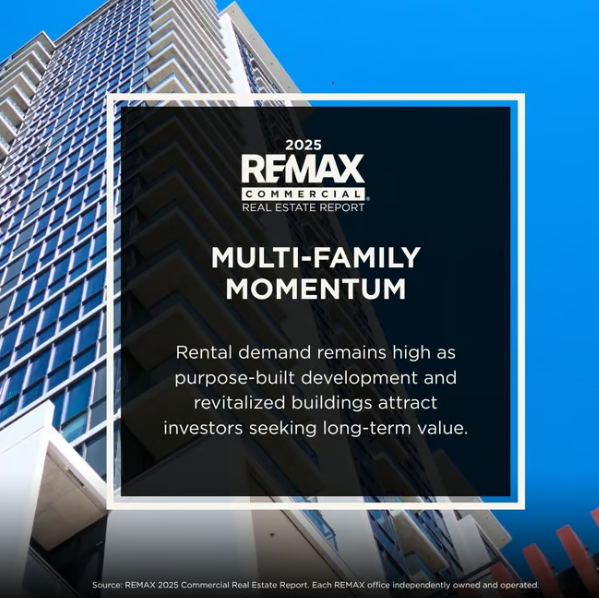
In its 2025 commercial real estate outlook, RE/MAX Canada pointed to growing economic uncertainty and global trade pressures driving a clear shift in investor behaviour — specifically a “flight to quality” and a renewed focus on fundamentals, purpose, and practicality when selecting assets.
In plain terms:
Investors are becoming more discerning — and buildings that look identical on paper are no longer being treated as equal.
That’s where construction type and building origin start to matter. A lot.
Purpose-Built vs. Converted: Same Units, Different Risk
A six-plex is a six-plex… until it isn’t.
Purpose-built multi-residential properties were designed from day one to function as rental housing. Plumbing, electrical, sound separation, layouts — all intentional.
They tend to be:
- More predictable
- Easier to finance and insure
- Lower risk for surprise renovation costs
- More efficient to manage long-term
The downside?
They’re harder to find — and when they hit the market, competition is usually fierce.
Converted properties, on the other hand, started life as something else — a house, office, school, or commercial building — then adapted into residential units.
They can be fantastic investments…
or absolute headaches.
Conversions often come with:
- Irregular unit layouts
- Mixed or patched-together mechanical systems
- Higher renovation uncertainty
- Greater compliance and inspection risk
Converted buildings aren’t bad deals — but they demand much sharper due diligence.
The Quiet Deal-Breaker: Construction Type
This is where many investors — and frankly, many agents — stop paying attention.
Construction type affects:
- Noise complaints
- Heating efficiency
- Insurance costs
- Maintenance frequency
- Long-term capital replacement
Wood-frame buildings
- Cheaper to build and renovate
- Better insulation in cold climates
- Noisier
- More prone to movement, leaks, and shrinkage over time
Steel-frame buildings
- Strong and stable
- Resistant to mould
- Higher upfront cost
- Still reliant on other systems that can fail
Reinforced concrete buildings
- Fire resistant
- Flexible layouts
- Common in mid- and high-rise construction
- Susceptible to cracking due to shrinkage and temperature change
Load-bearing masonry (common in older buildings)
- Historically durable
- Poor insulation
- Limited flexibility for modern upgrades
- Often require major mechanical overhauls over time
None of these are “bad.”
But they all come with very different long-term realities — and very different risk profiles.
Why This Matters More Than Ever
Most investors don’t lose money because they misread a listing.
They lose money because:
- Maintenance costs were underestimated
- Renovations were more complex than expected
- Tenant experience was overlooked
- The building didn’t match their risk tolerance
Two properties can look identical on paper and perform completely differently in real life.
In a market where capital is more cautious and quality matters more than ever, that difference isn’t theoretical — it’s financial.
The Takeaway
If your analysis stops at unit count, rent, and cap rate, you’re only seeing half the picture.
Ask better questions:
- Was the building purpose-built or converted?
- What’s the construction type?
- What does that mean for maintenance, noise, and longevity?
- Does this building align with your investment strategy?
That’s the difference between owning a portfolio…
and owning a project.

 The Evans Real Estate Group Blog