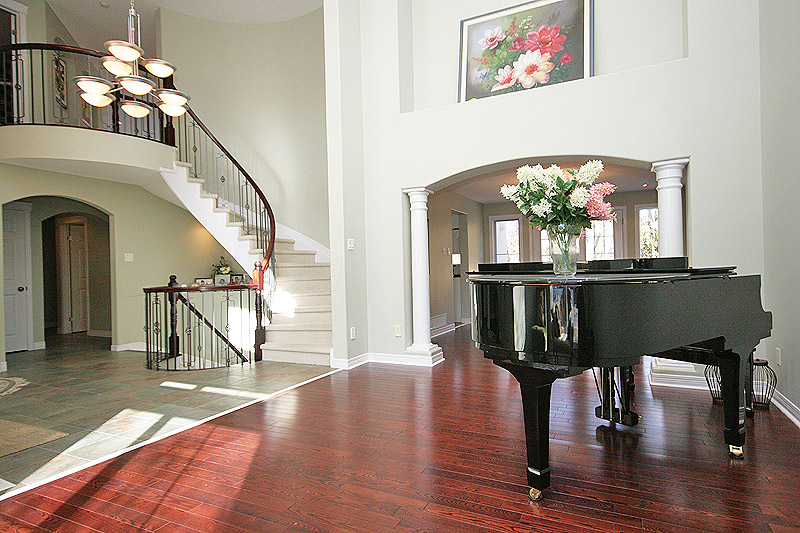
Luxury Home Sales in Ottawa Experience Dramatic Rebound in 2010.

I’ve been noticing that the market has been pulling my business towards those types of properties that require much more creativity and effort than the traditional home requires. Those that are investment properties, problem properties (aka opportunities in diguise), and my most interesting aspect of business – Luxury homes. I have been active in the luxury home market this year, and it is unlike all segments of Real Etate I have experienced thus far. The best way to sum it up would be: when there is lots of money involved, there is a lot of risk, a lot at stake, people are on their toes and emotions and levels of intensity are VERY high.

I received an email this morning from RE/MAX about the luxury home market, and I would like to share it with you. Some of you (like me) are no doubt in awe of some of the beautiful luxury homes in Rockliffe, Rothwell Heights or the Glebe even. Here we will look into this market segment a little closer to get a good look at how it has been developing. Enjoy!

Luxury price point: $750,000

 Demand for luxury properties in the nation’s capital continues to climb unabated, with a record 42 sales posted in the first quarter of 2010. The number of homes sold over $750,000 is up 121 per cent over the 2009 fi gure of 19 for the same period, and 27 per cent over peak 2008 levels. Home-buying activity remains unusually brisk in the upper end, bolstered by strong consumer confi dence and low interest rates. Even concerns over government downsizing have yet to impact sales in the top end of the market. In fact, nine homes changed hands over the

$1 million benchmark between January and March, up from four one year ago. While just under 200 properties, priced in excess of $750,000, are listed for sale, some key areas could benefi t from additional high end product. Older, established neighbourhoods such as Rockcliffe, Manor Park, Rothwell Heights, and Glebe are highly sought-after, but so too are properties in Manotick, along the Rideau River and the shores of the Ottawa River. Many suburban properties, especially those that offer estate lots, are also coveted. Multiple offers are a factor in the market, but they tend to occur on distinctive properties.

 The most expensive single-family home sold so far this year was priced at $1.949 million, while the priciest condo fetched $1,375,500—neither sale setting any record. An estate property in Rockcliffe is the highest priced MLS listing in Ottawa at present at $6.99 million. The upscale condominium is gaining ground with empty nesters and retirees in the city’s downtown core—a reality best illustrated by the upswing in sales.

 Design has improved tenfold in recent years, with newer, architecturally–signifi cant units that offer innovative fl oor plans and countless amenities moving quickly. The highest-priced condominium is currently listed for sale at $1.7 million in Downtown Ottawa. Diplomats, executives, politicians, entrepreneurs and professionals once again lead the charge for luxury accommodations—and the trend is expected to continue for the remainder of the year. Strong economic fundamentals will continue to support a vibrant housing market—and a robust high end—throughout 2010, with sales forecast to shatter the existing record set in 2009.

Video at http://www.remax-oa.com/MediaNewsroom/Pages/ReadMore.aspx?ItemID=57

For more information please visit www.remax-oa.com

30 Happiness Tips: Program Your Life for Optimum Enjoyment

For many of us, the goal of life isn’t ultimate wealth, a massive amount of stuff, or the perfect car. It’s happiness, plain and simple.

Some people may be created happier than others, with enjoyment of life programmed into their hardwiring. For others, getting to happiness isn’t always that simple. You weren’t programmed that way.

But like any programming, yours can be changed. Rewrite your life program to include as many of the following tips as appeal to you, and the ultimate goal of happiness can be yours. If you’ve already achieved complete happiness, well done!

  1. Experiment to find out what makes you happy.
    Different things make different people happy. If you aren’t sure what your hot spots are, experiment. Try different things out. Find out what you enjoy most. The answers just might surprise you. Try a few of the following for starters.
  2. Surround yourself with others who are happy.
    If you are around angry, depressed or sad people, it will transfer to you. You can’t help it. But if you’re around people who are happy, that will also transfer to you. You’ll also learn their habits, and learn to react the way they do when something bad happens. Slowly weed out the negative influences on your life and replace them with positive ones.
  3. Count your blessings.
    When something bad happens to you, try not to focus on it. Instead, take a minute to count your blessings. Everyone has good things in their lives, whether it is health or loved ones or whatever.
  4. Gratitude sessions.
    Along those lines, it is a good practice to have a daily gratitude session. Think about what you have to be thankful for, and silently thank those who have done something good for you in some way. If you have time, take the time to call them or email them to thank them.
  5. Think solutions.
    Instead of thinking about problems, move to the next step: how to solve it. When someone says to me, “Oh, this is so hard,” or “Oh, I can’t seem to do this,” or “Man, we don’t have any more of that,” I just ask them, “Well, what’s the solution?” If you develop solution-oriented thinking, you’ll be much happier.
  6. Connect with others.
    As much as possible, spend time with those you love, and with others who you enjoy. It could be a simple phone call, or a short visit. Or take a day with the person or people you’d like to spend time with. Have a conversation, do things together, be intimate.
  7. Accept things.
    We are often unaware of it, but we usually want things or people or ourselves to change. And that’s a sure way to lead to unhappiness, because we cannot control the world. We have to accept things as they are, try to understand them, even love them. Including and most especially ourselves: accept who you are, allow yourself to be yourself, try to understand and love yourself. Then do the same with the others in your life.
  8. Take time to savor life.
    Instead of rushing from one thing to another, resolve to have less to do each day, less appointments and fewer tasks. Then do each thing slowly, with mindfulness and ease, and try to be present in the moment. And truly enjoy whatever it is you do, from talking to eating to walking to just sitting.
  9. Notice small things.
    Along the same lines, try to notice when you feel good, or you’re not suffering, or you are tasting something really delicious, or you feel something cold or hot, anything. Noticing the little things will help keep you focused on the present.
  10. Treat yourself.
    Take a few minutes each day to give yourself a little treat, whether that’s something like chocolate or berries, or a bubble bath, or walking barefoot in the grass, or taking a nap. Whatever it is, treat yourself. You deserve it.
  11. This shall pass.
    When bad things happen, and you’re having trouble accepting it, think to yourself the same thing the ancients did: “This, too, shall pass.” And it will. And you’ll survive.
  12. Volunteer.
    When you give to others, whether that’s money or the stuff you no longer need or your time and love, you become happier. It’s true. Take 5 minutes today to call a charity and volunteer to donate some time sometime this month. It will make a big difference in your life.
  13. Follow your passions.
    If you do what you love to do, especially for a living, you wil be extremely happy. This is one of the best things you can do. If it seems impossible, don’t give up. Others have done it and you can too.
  14. Look at your achievements.
    Instead of looking at what you haven’t done, or what you’ve failed at, think about what you have done. Many times that’s much more than we realize.
  15. Laugh.
    Just the simple act of laughing can make you happier. Watch a funny movie, tell jokes, read a book by Douglas Adams or Terry Pratchett, go to humor sites on the Internet. And laugh your head off.
  16. Realize that you deserve it.
    You deserve happiness. That simple statement is actually profound for many people, as they don’t believe they really deserve to be happy. It’s often unconscious. If you feel that within yourself, you need to first realize that you deserve happiness. Repeat it if necessary.
  17. Get into the flow.
    There is a state of doing known as Flow, which is when you completely lose yourself in a task and forget about the world around you. It leads to happiness, and productivity. Set yourself up for it by clearing distractions, giving yourself a challenging (but accomplishable) task, and making it something that you like doing. Then try to lose yourself in that task.
  18. Have a goal.
    Too many goals will lead to ineffectiveness. Try to choose one goal and really focus on it. And work to accomplish it. Goals lead to happiness, if you make progress on them.
  19. Get inspired.
    Take time to read blogs or books or magazine articles about success stories related to what you want to do. It will get you energized.
  20. Celebrate.
    When you do something right, when you accomplish something, when you feel like it, reward yourself. Celebrate. Have fun, and pat yourself on the back.
  21. Autonomy.
    Try to have at least one area in your life where you have autonomy. It’s best if this is at work, but if not, find another place, such as a hobby or civic activity. You need to be in control of what you do to be happy.
  22. Spend time doing something you love.
    Make room in your life by eliminating some of the commitments you don’t really like doing, and replacing them with something you truly love.
  23. Show little acts of kindness.
    Each day, try to be kind to others in little ways, opening doors, smiling, giving up your place in line.
  24. Exercise.
    Just a short walk or run could lift your spirits and reduce stress. Nothing difficult. Just get outside and move.
  25. Catch negative thoughts.
    Monitor your thoughts. When you catch negative ones, try to think of something good instead. Corny, but it helps.
  26. Jealousy doesn’t help.
    Many people obsess about others who are successful or happy. That gets you nowhere, fast. Instead, be happy for them. Then focus on yourself, and what you do right.
  27. Stop watching and reading news.
    Sure, this sounds like a head-in-the-sand suggestion. But really, if you give this a try, you won’t miss a thing. And instead, you can focus on reading books and listening to music that lifts you up.
  28. Learn something new.
    It’s strange how many of us are afraid to try new things, or admit we don’t know something. But learning new skills or new information is one of the most fun things there is to do. Give it a try.
  29. Check out nature.
    Go and watch a sunrise or sunset. Watch the water, whether that’s a river or ocean or lake. Watch the stars, or the clouds. Watch animals. Watch people. Watch children. And be inspired by it all.
  30. Laugh some more.
    When you are in the middle of a bad situation, look around you, realize the absurdity of the situation, and just laugh. In a year, no one will care. In two years, you’ll be laughing at this anyway. So laugh now, and be happy now

Original Source:www.dumblittleman.com Written for Dumblittleman.com on 09/04/2007 by Leo Babauta and republished on 4/11/10. Leo offers advice on living life productively simple at his famous Zen Habits blog.

The man who defends himself in court has a fool for a lawyer.

One thing that gets to me is how some Salesman position themselves. Many of them, if not MOST of them, position themselves as middlemen that are merely a commodity that is interchangeable with their competition. What I mean is, there is this mentality that because they are in the middle, they are entitled to something strictly because of that, and that is the only real reason they exist – like they are some sort of gateway to the desired end result the customer desires. Really? Is that all you are? Well then, why WOULDN’T I try to find some way around this pain in ‘my side’ hurdle that is a salesman? Well – you would, and you should – if that is all the salesman is in your particular situation.

The best part of all, is the tactics these ‘salesmen’ use to get the vast majority of their business – and that is to negotiate on price. Everyone is so worried about price. “How much will it cost?” or “How much will you charge?” are things that are debated in the ‘price debates’. Come one now. Have some vision! What about how you are going to profit from a deal? Price only lasts for the second you shake hands and satisfies your ego – what about the effects the deal will have on your current situation and your goals? Will it put you in a better position and closer to where you want to be? It reminds me of those fast food commercials that have been playing around with this very idea – you know, the ones where the guys are around the lunch table and one of them is eating this tiny little burger and miniature fry – looks over at his colleagues and says “5 bucks!”, then the colleagues swallow a bite of their large Subway sandwiches (or whatever they are) and say “5 bucks!”. What a genius that price-driven shopper looked like! Did he get a deal or what? You know the old adage; you get what you…….  This is compared to the value-driven shopper that looked for how much he could benefit from spending his money. He saw an added value to his decision, and made a wise choice.  I know the example isn’t perfect because they paid the same thing, but the idea is what the motives were behind the purchasing decision.

Getting back to the larger picture here – lets say you are talking about a major purchase that will affect the lives of you and your family for years to come. Are you FOCUSED on a few thousand bucks? Or are you focused on the best benefit for you and your family, and yes – how much you will PROFIT from the deal. Sometimes it costs a little more up front to get a better end result. And what if a Salesman’s higher commission and subsequent harder work and better results actually earn you MORE profit than you would have with the cheaper priced competitor? Salesman A costs $10 and earns you $20, but Salesman B costs $100 an earns you $1000 – which would you choose? “Uhh… I only paid $20 for my salesman, and you paid $100! I got a better deal!” That doesn’t make any sense, does it? So why are people so focused on the up-front price?

Example: You get charged with a crime that you did not commit, and the potential sentence is a few years in jail and lots of probation (not sure how that works, but sounds about right). Do you show up and defend yourself? Do you take the court-appointed lawyer? Do you shop for a lawyer based on price? Or do you shop for the best lawyer you can afford that will deliver RESULTS? The saying goes –“ The man who defends himself in court has a fool for a lawyer”. O.J. Simpson + Robert Shapiro and Johnnie Cochran = Not Guilty.  Infer away.

Why do people buy cars with 20+ airbags and highest safety ratings, when there are other cars that will get them from A to B for half the price?

Exactly.

 Back to this price negotiating tactic. Put yourselves in a Salesman’s shoes. A customer comes to you and says they are interested in a product that you can provide, and you are in a position to make sure they get the very best product that suits their needs, and provide them with such a good service that they will be completely satisfied with you, have rave reviews about you and potentially turn into repeat and/or referral business. You have the ability to over-deliver, add your own ‘elbow grease’ to get them a better deal than anywhere else, and build a meaningful business relationship based on success and good business. Now you go through all of your bright ideas to think about how you can help them profit the MOST from the opportunity in front of you, and you open your mouth and say, “I can do the job for lower commission to save you some money”.

 Really? Is that how valuable you are?

 Why don’t I ask Bob over here right next to you if he will do the job for ‘your price minus fifty bucks’? Cause apparently that is all you have to offer, so let me explore how MUCH I can profit.

 See where this goes? Slippery Slope anyone?

Now rewind a minute or two and think for a second. You realize that the customer isn’t exactly sure what they want, and you know you can help them determine the exact need you have to address, put together some options for them that will work, and go the extra mile to find a great deal somewhere (maybe be proactive and try to drum up some supply for them from a unique source) and follow through to make sure they have everything they need, and they have satisfied all those needs and wants, and even a few they didn’t know they had or needed.

No will Bob do that? I don’t think so. Bob is simply a middle man and is about as creative as a doorknob.

Don’t be Bob.

Don’t look for Bob.

Don’t look for what is over his shoulder and wonder how far backwards he will bend to reach and get it for you. He might grab whatever peg he can squeeze into the hole, and then forget you the second you turn around. Who? What?

Look for the salesperson with the ability to listen and take the time and effort to get you what you need. The one who can explain your options and is willing to take a risk and put in legwork to get you the best of those options.

Does that make sense?

I’m just frustrated with all the Bob’s I’ve been meeting and seeing around lately.

No offence if your name is Bob. Or Rob for that matter.     🙂

Happy Buying!

Cheers

P.S. Havent written a blog in a while – I’ve been pretty darn buys and got carried away, so I apologize to all the readers and those of you who enjoy a could debate. You are all a great source of information and I promise to make a better effort to engage you more often! If you have any questions or concerns, or want a friendly and intelligent debate – contact me anytime!

In the name of progress…..

Cashflow 101

The Golden Rule in life is “Do unto others as you would have them do unto you”.

In business, the Golden Rule is “Cash is King”.

Seems like such a common sense thing to say, but it is surprising how many people forget about this basic rule and tangle themselves up in all kinds of financial messes. To be honest, this rule doesn’t just apply in business, but it applies in personal finance as well. No matter who you are, where you are, or what you are doing – if you don’t have cash – you’re not going far. Whether you work part time and have minimal expenses, have a JOB and a regular routine, or are an entrepreneur struggling for liftoff – CASH IS KING.

When people speak to me about their financial aspirations and how they can’t seem to get where they want to be, I usually ask them about very simple things to see if they are aware of (and following) basic rules. These questions revolve around budgets, revenues, expenses, and CASH. Im shocked to see how many people arent even aware of what their monthly expenses are! In my opinion, the very first thing people need to grasp is an idea of what their monthly ‘numbers’ are, and then make some adjustments and a budget right off the bat.

I am also a big believer in paper over plastic. When you get paid – take out the part of your budget you have allocated to spending in CASH and keep it in your wallet/purse – and use that and only that amount until you get paid again. Debit and Credit cards make a whole lot of no sense to me. Debit cards are easy access to money that receives no interest, and Credit cards aren’t even your own money that is borrowed at high interest. PAPER over plastic.

Another great tidbit is PAYING YOURSELF FIRST. Take some CASH and put a set amount away in some form of savings every time you get paid. EVERY SINGLE TIME. Your single most important bill should be your own personal savings. What is more important? Your Rogers bill or your path to financial freedom? If your Rogers bill is really that important – you will find a way to pay it. And besides – they will come looking for the money!

This past Christmas, I asked my wife to buy me Rich Dad Poor Dad by Robert Kyosaki. I admit, I was a little naive and thought it was a very simple book that touched on no-brainer concepts of personal finance. In hindsight – I was right! It is full of no-brainers. The funny thing is that most people aren’t even aware of these no-brainers, and not to say people have ‘no-brains’, but we really aren’t tought how to properly use cash in our everyday lives – and as a result arent even aware of these very basic rules and guidelines to using CASH. In my opinion, people need to view CASH as a tool – or even better – an employee. They need to view CASH FLOW as ‘work that is consistently getting done on their behalf’. The thing is, we spend most of our lives learning how to get an education, a good job and how to work hard to get lots of CASH – but when did we ever learn how to have CASH work for us? I have a degree in business, and I never once learned it! It took a book (from an author who admits that he does not have any incredible writing skills) full of a bunch of no-brainers to make me say “DUH! That makes SO MUCH more sense!”

One of the major lessons Robert Kyosaki touches on is the mindset of the poor and middle class, who work hard and save up to buy toys for themselves (clothes, cars, boats, jewellery, whatever) – which are really just liabilities (items that cost money and earn you nothing in return). Then there is the ‘rich mindset’ that saves up to buy assets (which earn you money) and then use THAT RETURN to buy toys. The difference in mindsets is DELAYED GRATIFICATION. My generation is one that wants everything now. Everything is fast paced, high rolling and instantly gratified – whereas mindsets of discipline, hard work and long-term reward are few and far between. If people can get their heads around the concept of using their budget and CASH as tools to invest in assets that will earn them money, they will be able get out of the vicious circle of increasing debt, more hard work, longer hours, more purchases, more debt, longer hours, etc etc etc. Robert Kyosaki calls this ‘the rat race’. 

A few quick examples: One of my old ING accounts says: “You have earned $700-and-some since becoming a saver!” To me that says, “Here is $700-and-some just for being smart and putting your money here for a while. Go ahead and spend it, and when you get back, there will be another $700-and-some.”

A better example – Investment Real Estate. 3bdrm condo for 170K, mortgage payments, property tax and condo fees for $1000 a month all-in. You purchase and rent out for $1250 a month. You get $250 a month for ‘managing’ the condo. $250!!! – that’s not bad at all! Now if you wanted to buy, say, a new entertainment centre and finance it for $75 a month – well guess what? Your CASH FLOW just ate that bill and is paying for it! Your ASSET just bought you a new entertainment centre!

Fast forward a few years and your monthly $250 ( + legal rent increases over time) and strong budget have been helping you manage your financial affairs, and you have been PAYING YOURSELF FIRST – and all of a sudden you find yourself in a position to purchase another investment property. This time, you are a little smarter, a little savvier, and know how to keep a property in shape and tenants happy. You find a better opportunity that may require a little more diligence and effort, but your reward is now another asset that earns your $300 a month positive CASH FLOW. Now you have $550 a month in passive income to help you along! How much faster are you going to progress to your goals?

Can you see the difference between the ‘Rat Race’ of work-earn-buy-work-earn-buy VS work-earn-invest-buy-grow-work-earn-invest-buy-grow? They are both cycles that take off in a direction and can really shock and surprise you – but one is a path to liabilities, debt, and frustration – while the other is a path to assets, CASH FLOW, and financial freedom.

To learn more about investment real estate, whether it be entry level or not – please don’t hesitate to contact me. I have a consistent client base for this kind of thing – and I would be more than happy to introduce you to how it works on a more detailed level. Consider the professionals in mortgage finance, personal finance, other forms of investment – the process is really deliberate, informed, and successful.

The second step is much easier than the first.

www.MarcEvansRealEstate.com

A Testimonial!

“I was very lucky to find Marc when I did.  I was very discouraged with my real estate search and Marc showed me that with a hard-working, dedicated Realtor on your side, the process is much more enjoyable!  One thing that impressed me about Marc is his passion for real estate and for making sure his clients find exactly what they’re looking for.  When you combine that with his business background, contacts, resources and open-minded attitude, you have a great partnership and assurance of success.  He saved me time and energy and always went out of his way to make sure my interests were protected.  Marc even spent his own money to investigate water issues with a property I was considering for purchase.  I can’t thank him enough for his dedication, hard work, and attention to my needs.  I would recommend him without reservation to family and friends.”

20 Powerful Beliefs That Will Push You Towards Success

I’m sure you have met at least one person in your life that is successful, motivated and self-empowered. This is someone that always seems to land on their feet, turns everything into gold and every success seems to come their way faster and thicker.

I’m also sure you have stopped to think about why these chronically successful people are so energetic, driven and successful with no apparent struggle while you seem to have such inertia impeding your progress.

Many believe that this is some unfair throw of the dice; that they just weren’t meant to become successful. Or perhaps it’s that the ultra successful people had some advantage or social lever that you didn’t. Occasionally this is true, occasionally success is inherited or stumbled into. However, more times than not, it’s created.

Success, first of all, is not a set of achievements or a combination of external factors; it is a mindset. Success is an attitude that comes from a framework of powerful beliefs and empowering thoughts. There have been many books written about this, probably some of which you have read. In the ones I have read, there always seemed to be a certain partiality – an incomplete picture – perhaps biased towards financial success or some other area but not another.

In the following list of beliefs and empowering thoughts, I would like to present a rounder view of success. One that I hope will give you a wider angle towards the meaning of success ranging from the material to the spiritual.

  1. I am in charge of my life
    The belief that you and only you are responsible of what you make of a given situation. Life does not happen to you but is a result of how you respond to opportunities and challenges.
  2. I can make tomorrow better
    The belief that you can change your future by your actions today. Some people are stuck in a fatalist (and dis-empowering) mindset where they believe they have little control on their life.
  3. There is a lot of opportunity out there
    Successful people have their mind set on abundance and opportunity and not scarcity and lack. Trust me this makes a world of a difference. Believe that life, energy, positivity, love, opportunities, success, happiness are abundant…because they are!
  4. I don’t need the approval of others to succeed
    If you are always looking for others’ approval and consent you will not go very far off and you will certainly not be self-empowered. Successful people follow their heart even when others are skeptical or do not consent.
  5. My intentions have effect on my reality
    This is not to believe in magic where you can wish things into being…well almost. Most people are blind to this but successful people know, consciously or otherwise, that a focused and strong intention is indeed a powerful thing that will make a lot of things happen and certainly get you to your destination faster.
  6. People are catalysts not barriers to success
    If approached in the right way and you network with the right people, you will leverage your efforts by a thousand fold. You will get things done faster by getting help from others.
  7. Positive thoughts are powerful and empowering
    Successful people know very well that choosing to start a day with a positive rather than a negative outlook means having successful day as opposed to a frustrating one. It’s definitely in the attitude.
  8. I am not separate from the rest
    This is a deep insight which only the truly successful and wise ones keep at heart. Commonly people believe that they are separate and cut off from the rest because they are individuals. True knowledge will tell you that everything is interconnected and success comes from acknowledging that you are not separate but one with the forces of life and the universe.
  9. How can I use this situation?
    When life throws a bad streak at you or you your plans go down the gutter, ask yourself “How can I use this?”. My life changed as I started doing this. You can always turn a situation around even by just observing, learning and sharpening your attitude.
  10. Hard work & perseverance are rewarded
    This is a rule of thumb even if perhaps reward doesn’t always come immediately but is paid off in the long run.
  11. My past can be reviewed and rewritten
    Some people are locked in their past or think that their past circumstances determine their future. Successful people are skillful in the art of interpreting their past and reframinmg it according to their optimal advantage.
  12. There are forces and energies which can help me if I’m conscious
    You might be thinking magic? Fairies? Not exactly. We cannot perceive certain subtle energies but some successful people believe in positive and negative energy flows from things and people just like ancient Chinese traditions believed in the flow of the Chi (Qi) or life energy. You can make yourself aware of this but it takes practice.
  13. Failure is good
    As in point 9, empowered people can turn a failure into success by learning from it and moving on.
  14. Don’t take it personally
    Get out of the trap of taking life circumstances personally or you will end up enslaved emotionally. When you get rejections, criticisms, cold shoulders, etc., put in within an impersonal bracket. They are not rejecting me, but an idea of me they have in their mind.
  15. Bad patches are temporary
    We all pass through bad patches. It’s the cycle of life. But we all get out of them unless we chose not to. Think outside of the moment.
  16. What I learn can be improved and refined
    Self-empowered people have a very dynamic view on life. There is always space for change and improvement especially on skills and lessons learnt.
  17. I am constantly developing and expanding new capabilities
    Just like the previous point, empowerment comes from a non-static outlook where life-affirming mind states are believed to expand not contract.
  18. Things are impermanent, don’t attach yourself to things
    This is a Buddhist concept which the real successful have learnt through experience. You might think that successful people are materialistic. I think the really successful are people who have a richer view on life and know how to ride life’s waves without getting emotionally attached.
  19. Forget, forgive, rejoice
    Don’t get stuck in resentment and grudges. Travel light without dragging an emotional baggage full of past disappointments.
  20. I already have all I need
    Self-explanatory. The path to success is through self-discovery and not world conquest as some would believe. People who have made it knew how to uncover their skills and true potential instead of obsessing with possessing

Original Source: Dumblittleman.com

Rent or Buy?

Lets pick a popular investment these days – a 3 bedroom, 2 bathroom investment condo.

180K purchase price or rent at $1200 a month.
5% Down payment.

Your loan would be:
180,000
-5% Down Payment
+2.75% CMHC Mortgage Insurance (must be insured when you loan over 80% of value).
Loan = 175,700.

Payments?
Amortized over 35 years, 5 year fixed at 3.84%
Monthly Payment is $761.18

Let’s assume condo fees of $200 and Property Taxes of $1800 a year.

761.18
+ 200
+150 (1800/12)
= $1,111.00 per month.

Cheaper? Yes it is.

Now you’re telling me that $200 is low for condo fees, and what if taxes were higher – say $2000 a year?

Sure thing…

$761
+$300 condo fees
+ $166 taxes ($2000/12)
Total monthly payments = $1,227.00

Cheaper? You might not think so… but let’s really look at what is going on here.

That $761 monthly payment actually has a little over a $200 component of it going towards the loan itself (called the principal), while the other $561 of it goes to interest on the loan. Over time, this $200 figure gets larger and the $561 part gets lower until the loan is paid in full (in theory over 35 years of the amortized mortgage).

What does that mean? It means that $200 of the payment is actually being put into a savings account for you called ‘Equity’ in your home. What this means is that you are KEEPING that $200 component and putting towards the value of your home which can be recognized once you sell down the road. Just like a savings account – your money is being put somewhere to be withdrawn by you and for you at a later date.

So this means that out of the $1,227 payment (which was estimate high), $200 is being put back in your pocket and $1,007 of it will never be recouped.

Now if you were renting – how much of that $1,200 monthly payment will never be recouped?

You guessed it – ALL OF IT. Never to be seen again.

Now take into account the following:

As a general rule, real estate appreciates in value by 5% a year (more in recent years, but lets be conservative here), and what that means is that when you OWN your property, over the period of ownership the home becomes more and more valuable –which translates into a higher sale price when you sell compared to when you bought it. So you essentially MAKE money on the sale of the home! MORE MONEY you do not make when you rent. That $180,000 condo could be worth well over $200,000 in a number of years. In a great city like Ottawa that has a major economic driver like the employment rate being sheltered though the huge amount of public service employees – our economy is arguably a very stable one that would not be subject to huge fluctuations, and therefore see consistent growth over the years – exactly like what we have been seeing year after year.

So those are TWO ways that real estate make money.

But guess what – it gets better. There is a third. A little gem that should be sought out by all investors – POSITIVE CASH FLOW.

Let’s take that condo of $180,000 with payments (that were estimated HIGH) at $1227, and you rent it out for $1300 a month to a family. That’s about $70 a month in your pocket. That my friends, is called icing on the cake.

Now what if you wanted to live there? Or had a son or family member who wanted to rent out a room?

No problem. You live in one room, and you rent out atleast one bedroom for $500 or $600 a month. If there is a bedroom in the basement with a washroom – you might get $700 for the whole lower level. So apply this $500 – $600 dollars to your monthly costs of $1227 (on the high end), and you are OWNING a property for under $700 dollars a month, and $200 of it is being saved in your ‘equity’ saving account each and every month.

Less money out of pocket per month, your investment appreciating in value over the years, and potential for positive cash flow every month all mean a TREMENDOUS difference over time.

Finally – what if your numbers were better that what I described? Is that possible? Was I exaggerating?

Well – you be the judge. I have two investment condos for sale at the moment. One is $187,000 that has condo fees of $220 and taxes of $1700 a year. So the number would be better there.

I have another for $164,000 that (while needs a few thousand to upgrade), has a large bedroom in the basement that could fetch $600 a month easily, and the units themselves rent for about $1300 – while total cost would be under $1100!!!

You do the math. Either way, ownership is better. In a relatively stable and growing market like Ottawa, historically and as far as predictions go – we are not in a volatile market where property values are likely to drop, and therefore REAL ESTATE provides a great way to leverage your money, earn some income, save for retirement, and help secure your financial freedom.

Besides, you can’t live in an RRSP. Last time I checked – a roof over your head meant something.

Happy Buying, and Happy Selling!

Contact me anytime to chat.

Cheers.

http://www.MarcEvansRealEstate.com
marcevans@remax.net
613/868-4383

RE/MAX Housing Market Outlook 2010 – Ottawa

Ottawa’s residential housing market is weeks away from posting its best year on record in terms of unit sales and average price. Despite a slower than usual start to the year, more than 15,500 homes are expected to change hands by year-end, up 11 per cent from 2008 levels, and five per cent ahead of the previous benchmark set in 2007 (14,739). Housing values in the nation’s capital are also expected to climb, appreciating five per cent to $305,000 in 2009, up from $290,483 one year ago.

Job security and stable economic performance are the major factors influencing those considering homeownership, a decision enhanced by rock-bottom mortgage rates. While demand for housing has steadily increased throughout the year, supply has been an issue, with limited inventory reported in many hot pocket areas of the city. First-time buyers continue to represent the lion’s share of activity, driving sales of affordably priced product across the board. Townhomes, condominiums, and low rise apartment units are growing increasingly popular with this segment of the market due to price point. Revitalization in some of Ottawa’s older communities is gaining momentum as entry level buyers choose to invest a little sweat equity in their purchases. Neighbourhoods such as Mechanicsville and Preston St. are areas to watch, with housing values appreciating with every renovation completed.

Experienced purchasers are also taking advantage of ideal market conditions to move up and over to a larger home, better neighbourhood, or different housing type. Sales in the top end of the market—priced in excess of $750,000—have been steady, with the number of homes sold up moderately over 2008 figures. While real GDP growth is expected to fall for the first time in more than a decade in 2009, a solid rebound in the area of three per cent is forecast for 2010. New construction, including a new $21 million sporting event venue and training centre in Rockland, is expected to bolster economic performance in the New Year. Increased enrolment at Ottawa’s four post-secondary institutions has also prompted additional capital expenditures, including a new $112 million, 15-storey tower at the University of Ottawa, scheduled for completion in 2011; two new buildings at Carleton University; a construction trades centre at La Cité collégiale, opening in 2010; and a new $70 million construction trades centre at Algonquin College.

While the federal public service continues to provide a great degree of stability and security in Ottawa, there are concerns regarding continued layoffs within the high-tech sector. High-tech jobs have declined by about 14 per cent year-over-year. However, Ottawa’s employment rate is the highest of the 11 economic regions in the province. As such, unemployment levels in Ottawa, at just under six per cent, are relatively stable and expected to remain well under the close to nine per cent provincial average. Given a continuation of sound economic fundamentals in the New Year, Ottawa’s residential real estate market will stay the course. The number of homes sold by year-end is expected to match heated 2009 levels, while average price is expected to post further gains, rising four per cent to $317,500 in 2010. First-time and more experienced buyers are expected to work in tandem, driving activity at virtually all price points. Despite an increase in inventory in the Spring, seller’s market conditions should prevail throughout much of 2010. Low vacancy rates and volatility in the stock market may also spur some investment activity in 2010, as investors seek multi-unit residential property for a long-term hold.

Predictions?

Homes are getting pretty expensive. Im seeing singles pushing 500K in the East and West ends, and Towns pushing 300K.

why? Pent up demand, low inventory and cheap money.

So what happens to the 2nd larget demographic in Ottawa (25-30years old) in a handfull of years when the market is different?

Picture this: You go out, you buy a nice townhome for 270K, you have a child, a dog  – and you live your life.  Now mortgage rates go up (which they likely will), and if you are on a variable rate mortgage it could be a year – or a fixed , maybe a few years – 5 at most.

The past little while has not been a time of economic expansion for yourself, because you’ve been supporting this new family. So what happens when you have to re-negotiate your rate on a home that you were possibly both over-leveraged into and bought for a premium due to affordable rates?  Now you have an expensive home with an expensive loan. hmmm… HOUSE POOR.

Unfortunately, I think this is going to happen to many people.

Makes me happy for all those people I helped buy homes that seemed to be 15-20K under potential market value, and all the while they could have afforded MUCH more – these people will be alright.

What do I think the answer will be? Green Housing. Eco-friendly developments, and heavy government incentives.

I think people are going to need to move to (relatively) more affordable housing (via $$ incentives) that will present a lower carrying cost to offset the volatilty of mortgage rates over the life of the investment.

Incentives for either a green retrofit or new green builds will be a sensible bailout for Canadian homeowners that have overleveraged themselves during THESE times.

I would think that it might be a wise invesment to get into these kinds of homes by buying stock or even buying these homes pre-construction once plans are released.

New technology and architechtural advancements will combine to give Green living a huge appeal in a coutry like Canada – where the land is already are major source of enjoyment.

Cottage living, ice fishing, skiing, snowboarding, hunting, four wheeling, fishing, hiking, sight seeing – all things Canadians enjoy that come from the land.

The harmony between housing and environment has incredible potential – and my prediction is that we will see this relationship grow tremendously over the next 5 years.

Thoughts?

Postscript:

the LARGEST demographic – our parents (50-65 years old) will be looking for LIFESTYLE living solutions that run with the land. Waterfront retirement resorts or granny flats, functional housing backing onto golf courses and wetlands that will provide them with gorgeous views, opportunities to see wildlife and enjoy peaceful walks. These types of housing, being ECO-friendly, will also provide better air quality, more sunlight and perhaps even community gardens. I would PERSONALLY like to see housing for the elderly that not only do this, but also instead of offering RENT  – perhaps the buildings, resort or immediate community could be a corporation – like a condominum arrangment perhaps – where these people can continue to enjoy the benefits of Real Estate investment, while condo fees support staff and management.  Why pay the corporation when you can BE the corporation?

And if you like this blog, check out a few of my other entries:

https://ottawacapitalgroup.wordpress.com/2008/09/18/agricultural-innovation-out-of-necessity/

 https://ottawacapitalgroup.wordpress.com/wp-admin/post.php?action=edit&post=26

https://ottawacapitalgroup.wordpress.com/wp-admin/post.php?action=edit&post=59