Two Game-Changing Real Estate Investments Discovered Through Years of Market Watching

As a real estate investor, I’ve always believed that the best deals aren’t found online or through flashy listings—they’re uncovered by having a deep understanding of the market and consistently being on the ground. This philosophy recently led me to two incredible investment opportunities that I discovered simply by driving through areas I had been watching for years.

Investment #1: The 32-Acre Lot with Unmatched Logistics Potential

One of the properties that caught my attention is a 32-acre lot strategically located right off a major highway. What makes this parcel particularly enticing is its proximity—just one interchange away—from a major port of entry, a railway loading station, and the U.S. border. This trifecta of logistical advantages immediately signaled an opportunity for industrial development, warehousing, or a transportation hub.

I had been monitoring this area for years, watching how infrastructure improvements and cross-border trade expansion were influencing land values. When I noticed subtle changes in traffic patterns and increased industrial activity nearby, I knew this was a prime moment to act. Now, with all the tariff discussions and the federal government emphasizing the need to incentivize domestic manufacturing and production, this lot is more poised than ever to be a goldmine. As companies look to reduce dependency on foreign supply chains and establish domestic production hubs, properties like this will be in high demand.

Investment #2: The Land Assembly in a High-Exposure Town Center

The second property is a unique land assembly in a small town that is primed for growth. This site is positioned at the town’s most significant intersection, where four major streets converge. With its direct access to a major highway, it boasts unparalleled visibility and accessibility—two critical factors for commercial success.

I’ve been watching this town evolve for years, noting the steady increase in both residential and commercial activity. While many investors overlook smaller towns, I saw the potential early on, particularly as businesses began moving in to cater to the growing population. When the opportunity to assemble multiple lots at this key intersection presented itself, I immediately recognized its potential for mixed-use development, retail, or even a boutique hospitality project.

The Power of Long-Term Market Watching

Both of these opportunities reinforce the importance of patience, market knowledge, and firsthand observation. By consistently driving through these areas, keeping an eye on infrastructure projects, and understanding local economic drivers, I was able to spot undervalued assets before they became obvious to the broader market.

For investors looking to find similar opportunities, my advice is simple: spend time in the markets you’re interested in. Watch traffic patterns, note changes in zoning, and pay attention to where businesses are expanding. The best deals aren’t always on the MLS—they’re waiting to be discovered by those who know where to look.

If you’d like to know where these investments are, and would like to be kept in the know for others – send me a message 🙂

Selling This Spring? What You Need to Know About Capital Gains Tax

f you’re planning to sell your home this spring, you may have heard discussions about changes to the capital gains tax. Some homeowners are concerned that these changes will impact them, but let’s clear up any confusion: if you’re selling your primary residence, you are not affected.

Understanding the Capital Gains Tax Changes

Recently, the government proposed an increase in the taxable portion of capital gains from 50% to 66.7% for individuals earning over $250,000 in capital gains. Initially, this change was set to take effect in June 2024, but due to delays in Parliament, it has been postponed to January 2026.

While this change impacts some property sales, it does not apply to homeowners selling their primary residence.

Why Your Principal Residence Is Exempt

Canada’s tax laws provide a principal residence exemption, which means that when you sell the home you’ve lived in as your main residence, you do not pay capital gains tax on any profit. This exemption remains in place, and the proposed tax changes do not alter this rule.

Who Is Affected by the Changes?

While primary homeowners are not impacted, these tax changes could affect:

  • Owners selling rental properties
  • Individuals selling second homes, such as cottages or vacation properties
  • Real estate investors and house flippers

If your sale does not fall into one of these categories, you do not need to worry about capital gains tax on your home sale.

What Home Sellers Should Focus on Instead

Rather than being concerned about a tax that does not apply, homeowners should focus on maximizing their sale by:

Timing the market well – Understanding seasonal trends and demand can help you sell at the right time. ✅ Preparing your home for sale – Small improvements and staging can make a big difference in attracting buyers. ✅ Working with a real estate professional – A knowledgeable agent can help you navigate pricing, negotiations, and marketing strategies to get the best outcome.

The Bottom Line

If you’re selling your primary residence, capital gains tax is not something you need to worry about. The rules regarding your exemption remain unchanged. Instead, focus on positioning your home for a successful sale and making the most of this spring’s market opportunities.

If you have any questions about selling your home or navigating the current market, feel free to reach out!

The Beginner’s Guide to Real Estate Investing: 3 Smart Entry Points

If you’re thinking about getting into real estate investing, there’s one rule you need to remember right out of the gate: risk and reward go hand in hand. The lower the risk, the lower the potential return—but also the fewer headaches. The higher the risk, the greater the potential for profit, but only if you know what you’re doing.

That’s why the first step in real estate investing isn’t picking a property—it’s assessing your own resources and skill level. How much capital do you have? How comfortable are you with renovations and property management? Once you know where you stand, you can decide which entry point makes the most sense for you.

Here are three great beginner-friendly real estate investment options, ranked from lowest to highest in terms of required resources and skill:


1. The Hands-Off Approach: New Build Condo or Townhouse

Best for: Investors who want a low-maintenance, low-risk option.

If you’re looking for a relatively straightforward way to get started, buying a pre-construction condo or townhouse is a great option. These properties are new, meaning minimal repairs and maintenance, and they often come with a builder’s warranty.

Pros:

  • Lower upfront maintenance costs
  • Strong rental demand in growing areas
  • Hands-off property management if desired

Cons:

  • Higher purchase price per square foot
  • Condo fees can eat into profits
  • Limited ability to add value through renovations

If you want a set-it-and-forget-it type of investment, this is your best bet. Just be sure to research the developer and the long-term rental market in the area before signing on the dotted line.


2. The Income Generator: Bungalow with a Secondary Dwelling

Best for: Investors who want to maximize rental income without a massive renovation project.

If you have a bit more capital and don’t mind being a landlord, buying a bungalow with an existing secondary dwelling (like a basement suite or coach house) can be a fantastic move. You’ll benefit from two rental incomes off one property, which can help offset mortgage costs and increase cash flow.

Pros:

  • Built-in income stream from day one
  • Greater affordability than a multi-unit building
  • Stronger appreciation potential than a condo

Cons:

  • Requires property management skills
  • Potential for tenant-related issues
  • Some municipalities have strict regulations on secondary units

This is a great middle-ground option for those who want more cash flow without diving into full-scale renovations.


3. The Value-Add Play: Home with Secondary Dwelling Potential

Best for: Investors with some experience or a willingness to take on renovations.

For those who want to force appreciation and maximize returns, buying a home with secondary dwelling potential can be an incredible opportunity. This means purchasing a property that doesn’t yet have a second suite but could be converted with the right permits and renovations.

Pros:

  • Ability to buy below market value and add instant equity
  • Higher rental income once renovations are complete
  • Greater control over the design and layout of the secondary unit

Cons:

  • Requires more capital upfront
  • Zoning and permits can be a hurdle
  • Renovations can be unpredictable

This strategy requires a keen eye for opportunity and a solid understanding of local bylaws. If you’re up for the challenge, it’s one of the best ways to build wealth through real estate investing.


Which Option is Right for You?

Each of these strategies has its place, but the best one for you depends on your comfort level with risk, your available capital, and how involved you want to be. If you’re new and want to play it safe, go for a new build condo or townhouse. If you want higher returns but a manageable level of risk, a bungalow with a secondary dwelling is a solid middle ground. And if you’re willing to put in the work for maximum upside, a home with secondary dwelling potential could be your best bet.

No matter where you start, remember: successful real estate investing is about making smart, calculated decisions, not emotional ones. Assess where you are today, pick the right strategy, and take that first step toward building your real estate portfolio.

Buying Your First Investment Property

YES, it is true, Real Estate investing produces more millionaires than any other industry. But that doesn’t mean it’s dummy proof.

And YES, it is true, it’s hard to lose when it comes to Real Estate investing over the long term. But that doesn’t mean you CAN’T lose, or at least that some strategies are better than others.

So where do you start?

Well – here are some questions you need to consider.

How much money do you have?

How risky do you want to be?

Are you more interested in short term CASH or long term equity?

Do you want something turn key, or something that needs work?

How handy are you?

How much time do you have to put into this?

How big of a project are you comfortable taking on?

When you take the time to answer those questions you can really start to determine what works best for you.

For example. Lots of money, time and skills, willing to take on risk and looking for short term cash? Maybe we buy a house on a main street on a big lot where prices aren’t yet too crazy but rents are still high – and we build a wicked multi unit, rent it out, and flip it as a cash cow.

Little money, time and skills? Want as little risk as possible and ok with long term equity? Let’s buy a brand new apartment in the most steady location we can find and rent it out for 10 years.

Both could be your first investment – and one is SUPER ambitious and the other is pretty tame. Both are good.

Rather than list all the options, just answer all those questions and feel free to send me the answers for recommendations on investments that match your answers.

What’s the most popular 1st time investment in my experience you ask?

I’d say a purpose build duplex that could use some lipstick and that would fetch some great rents. That’s a pretty decent first step that gives you some low(ish) risk that will probably get you a little positive cash flow but will absolutely get you some nice equity over the long term.

The MOST IMPORTANT part to Real Estate Investing? START.

Honestly, that’s it. Even slightly sub par investment will pay off big time if you hold it long enough, but what’s undeniable is that when you own Real Estate you have more options. If you have a property that builds some decent equity, once that mortgage is due you can refinance it and pull out some money to invest in more Real Estate – and it snowballs from there.

If you want to have a talk about how to get in the game, send me a message and I’ll be happy to talk 🙂

The Real Estate Bargain Bin

Where to find the best deals? Here are the best ‘bins’ to keep your tabs on:

 1. Estate Sales

An unfortunate effect of the beautiful lives we all lead, is that one day we will eventually pass away. What happens to a person’s home once they pass? Quite often, the family sells the property and gives the proceeds to whichever direction the will intended, and all the bills and debts are paid.

Why is this an opportunity? Quite often these Sellers are looking to unload their property quickly and just want it SOLD so they can move on – giving YOU, the buyer, an opportunity to walk in and potentially acquire the property for a discount.

2. Power of Sale

High credit card balances? Line of Credit out of control? Budget completely blown? Many people will answer YES to this question, and to these people, sometimes it is just TOO MUCH and they need to sell their homes to downsize and decrease their debt payments. Sometimes these people can’t even pay the mortgage or taxes, and the bank will seize the property and appoint a Realtor to sell it to re-coup the loan!

Why is this an opportunity? Again, motivated Sellers – that’s the key. These people need to sell their home and get their bills paid asap. Money talks, and if you can get yours in front of them first – it might give you an edge.

3. Handyman Specials

 Nice personality, but needs a little lipstick? Look no further than your neighbourhood ‘handyman specials’. These homes come from a variety of sources – from those that can’t keep a house to those that tried to flip but flopped. Pick up these homes at a bargain!

 Why is this an opportunity? Well, a property that is hard on the eyes is often hard to enjoy. A property that is hard to enjoy is hardly valuable, and hence comes at a discount because there is little to no demand in the regular everyday market. These sellers realize quickly that their home wont sell for the average price, and may need simply be in dire need to move on.

 4. Private Sellers

These Sellers have opted to sort through a riff raff of buyers themselves, and learn to pre-qualify them, negotiate with them, and close them. Let me tell you – not as easy as it sounds. Some of them even decide to work exclusively with un-qualified buyers that share the highest level of incompetence and advertise that they do not want agents to bring quality buyers to them!

Why is this an opportunity? Knowledge is power, and these folks, quite often, have little of either. Now there will be the odd exception, however the mass of these sellers did not price their homes correctly and can therefore not defend their price properly, they do not know how to negotiate (and are not even aware of) terms and conditions in a contract that can make a deal even MORE favourable than a low price, and therefore are not best suited to get the best advantages in a deal. Now I have never, and will never be unethical or unprofessional with a Private Seller, however; when I represent a buyer it is my obligation to get them the best deal possible.

Tricks of the Trade: I am able to manipulate the MLS database to search for homes by Seller (i.e. Contains “ Estate” or “Bank”) and can also search by keyword (i.e. Contains “handyman”, “tlc” or “flip”). Furthermore, I can have listings that match these criteria automatically sent to my clients inboxes the minute they are uploaded by other realtors, bypassing the overnight delay by the Ottawa Real Estate board, and therefore giving my clients a window of opportunity to view listings before the public does. This also really limits the homes my clients see to what they really want, instead of filtering through a hundred listings that “might work”. Pretty much any information that is related to a listing, I can transform into search criteria and can sort, sift and organize automatically and have sent out. These aren’t generic searches either (price range, location criteria), I’m talking digging deep and going above and beyond to get the cream of the crop. With regards to private sellers, most are open to working with me once I talk to them about the calibre of buyers I work with and the other ways in which I can help them, but they are really leaving themselves open to all kinds of pitfalls. Not only is pricing an area where they are at a disadvantage, but they are also (quite often) not well versed in legal matters (yes – contracts are complex legal documents), but also in the coordination and timing of all the related professionals that will all play a role in the success of the deal.

I hope you enjoyed the insight into the Real Estate Bargain Bin!

If you would like access to the BINS, and keep your tabs on any of them, simply visit www.RealEstateBargainBin.info

Cheers!

This is what a Fortune looks like when it is born.

Remember my rant about the best things in life being free? Free things like information?

Remember how I said some people would find it scary that I would make this information public to you, since they would rather make it seem like they came with the information themselves, or they would rather bait you with it?

Well, too bad for them…

I want you and everyone to have this information so we can elevate ourselves in terms of our savviness, real estate positioning and subsequent financial success. Let’s all have incredible properties!

Here is a start – INFORMATION. This stuff is actually PUBLIC information – but I doubt any of you know how to access it!

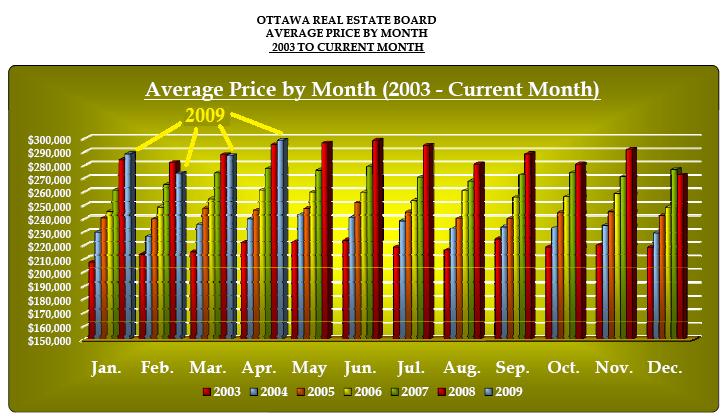
First up – Month over month information. Remember all the buzz about a recession? Lets look at Ottawa activity, month over month since 2003.

Graph2

See the 2009 months I highlighted? (the ones we have gone through already) On average, ther are not too off from 2008 averages – slightly above in some cases, slightly below in others.

See the decline in 2008 prices from about June to December (in red?) Then our latest few months have indicated an INCREASE!

Now look at a specific batch of years by month. lets look at January for arguments sake (first one). 2003 to 2009 = see the increase? A little over 200 to just under 290 in 6 years!!

These numbers are from the Ottawa Real Estate Board a.k.a the horses mouth – so dont just take my word for it!


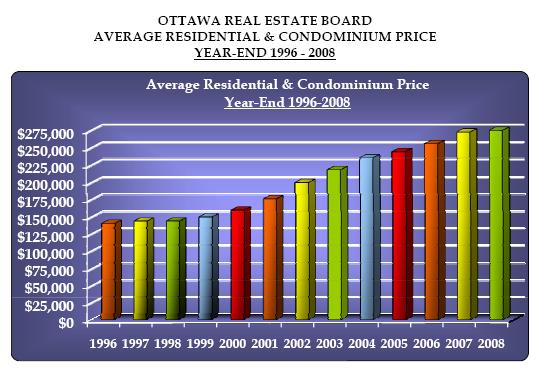
Here is another quick one: Year over year since 1996 – so 13 years and a few months

Graph

What does that say – about 137.5K to about 268-270K ?

Think about that… if you bought a house for 137.5K ten years ago, you would now have 132K in appreciated equity PLUS whatever the principal went down to over time, PLUS whatever POSITIVE CASH FLOW you would have earned over time as a result of making the most out of your equity in your house (i.e. after 5 years, taking out equity to finance a low maintenance investment property that earns you hundreds of dollars a month IN YOUR JEANS).

Ever feel like wealth is just too far out of reach to even properly imagine? Ever wonder how people have made their fortunes, and dream of having seemingly endless supply of cash to rely on?

I do! All the time! Thats why I got into this business. To build wealth over the long term and to pass that on to my family and future generations.

This is what a fortune looks like in the beginning.

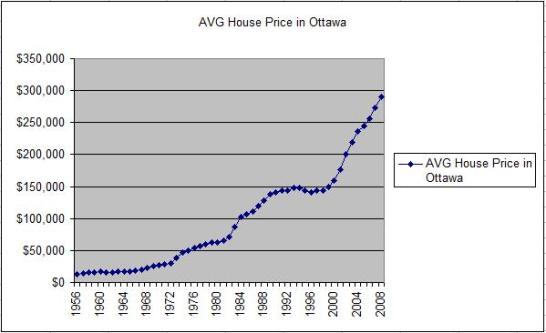
How about over a longer period of time? Here you go! (from an earlier post)

avg-sales 

Imagine what kind of Fortunes a 60 or 70 year old person could be leaving his family based on these figures!

Imagine if that person would have properly leveraged themselves in Real Estate and grown their portfolio over time!

Pick yourself up some Real Estate for some of the best rates this country has had in over 50 years!

Bank of Canada will show you the record lows we are experiencing right now – Prime at 2.25%!!!!

CPI (Consumer Price Index – average price increase of a basket of goods) is down to 1.2% while the average wage increase is up to 4.3% this year! Purchasing Power is HUGE right now!!

I’ve given you the information – what are you going to do with it?